


This thought-provoking quote is attributed to Gloria Clemente, a character from the film White Men Can’t Jump, rather than an AFL figure like Craig McRae or David King.
Historic draws in AFL
The inaugural match of Australian rules football concluded in a draw, albeit after a lengthy three-week contest with each team scoring one goal. Today, the sport is heavily influenced by lawyers and television executives, making draws unappealing to many. However, these rare occurrences still happen once or twice a season, leaving spectators in a state of confusion and prompting discussions about the potential for extra time to align with the finals format.
Over the weekend, fans witnessed two draws within just 24 hours. The encounter between Collingwood and Hawthorn marked a historic moment as it became the first instance in VFL/AFL history where the same teams drew in both matches of a single season. It would have been fascinating to see how this game aired on free-to-air television—if it had been broadcast on a Saturday night—might have prompted more demands for extra time. Ultimately, the match’s outcome did not necessitate a definitive win or loss. In Australian rules football, a draw carries a distinct significance compared to sports like cricket and soccer. As Sam Mitchell remarked after their April matchup, “S ometimes when you win, you really lose. And sometimes when you lose, you really win. And sometimes when you win or lose, you really tie. And sometimes when you tie, you actually win or lose. Winning or losing is all one organic mechanism, from which one extracts what one needs.”
Chaotic final moments
This particular draw featured a chaotic final minute and a half. Both teams, known for their organizational prowess, momentarily faltered, nearly squandering the opportunity for four points. Even the camerawork seemed to struggle to capture the moment. The quality of the sport’s coverage has noticeably declined over the past decade, with directors aspiring for cinematic grandeur and camerapeople failing to track the action adequately.
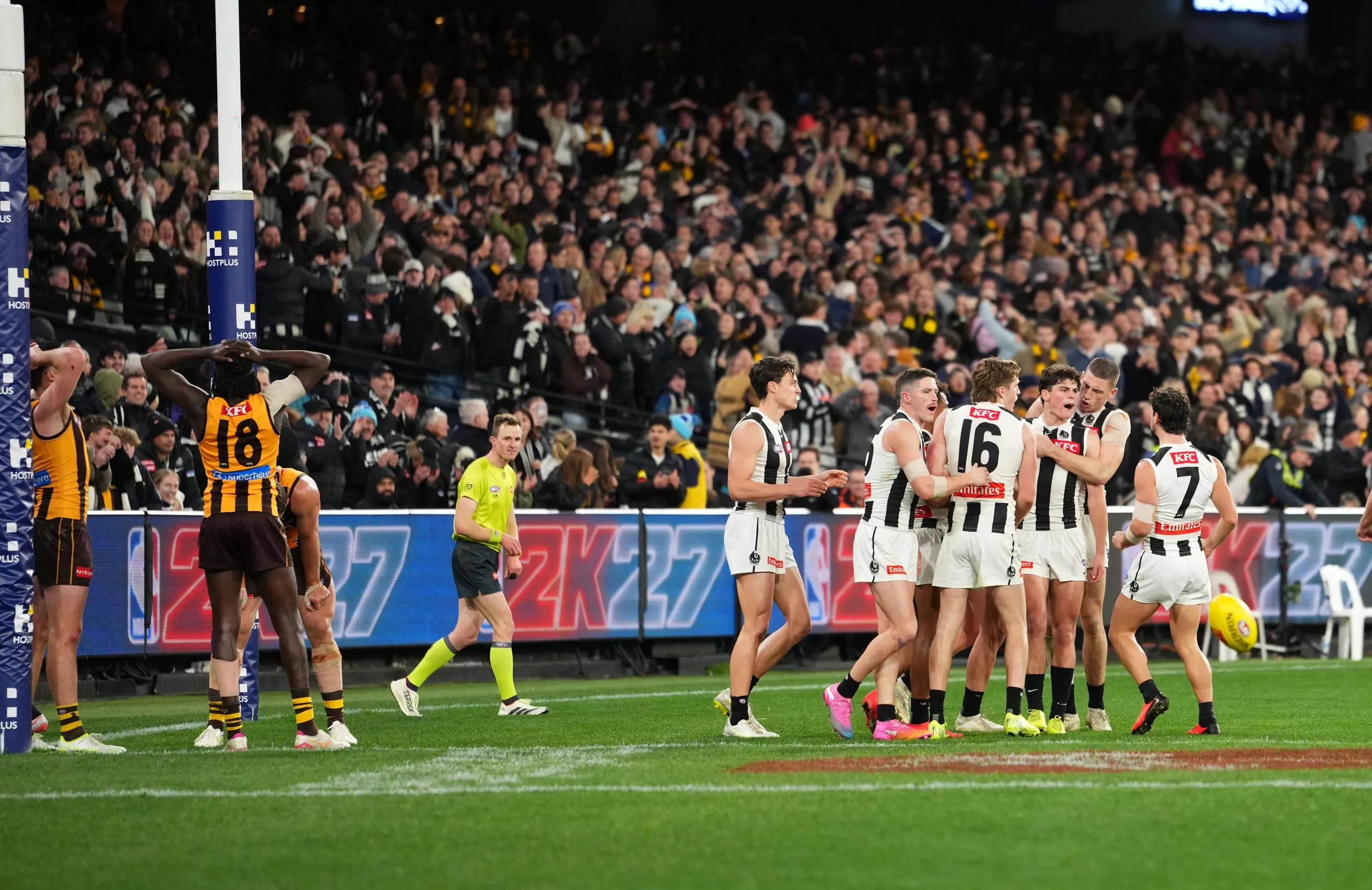
Collingwood once again demonstrated their resilience. Five players had participated in ten games or fewer, and the team was missing key figures such as Steele Sidebottom, Jeremy Howe, Brayden Maynard, and Darcy Moore. McRae frequently discusses “having a different emotion that you don’t usually get adds to the beauty of sport” a format that benefits intelligent, seasoned competitors, and Collingwood still has a sufficient number of those athletes. How senior coaches react to a draw reveals much about their mindset. Mitchell, who authored a biography titled Relentless, did not seem particularly pleased with the result, while the ever-optimistic McRae celebrated it as a victory. Neither perspective felt entirely convincing. This is the charm of draws; in a sport where every victory is hailed as a triumph and each defeat considered catastrophic, having a grey area can be refreshing.
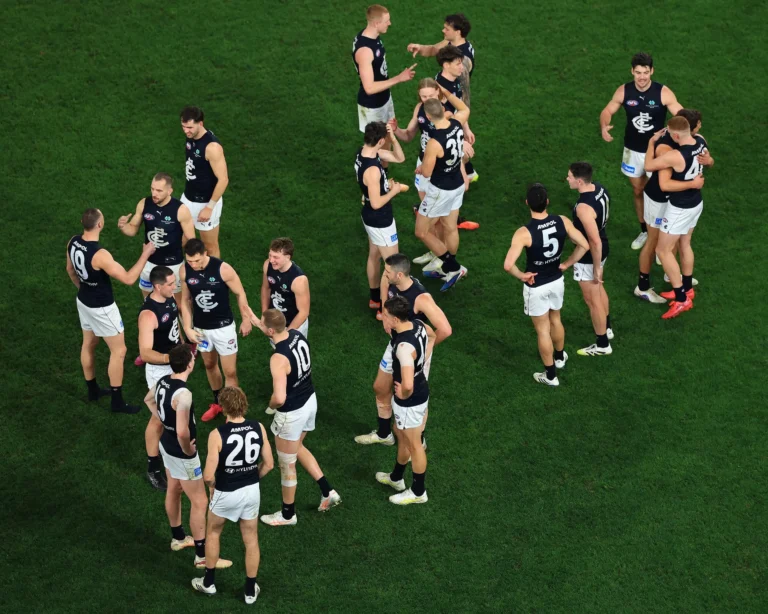
The drama continued on a hectic Sunday afternoon at the Docklands. In this instance, the draw was devoid of ambiguity. Carlton did not deliver their strongest performance under Josh Fraser’s leadership. Contrary to expectations, the Bulldogs forced them to battle for every inch and second. Luke Beveridge’s pre-game remarks lacked enthusiasm, as his “I’m as flat as a shit carter’s hat,” on the Bulldogs’ website resembled a hostage video. Following last year’s exit, he expressed, “I’m as flat as a shit carter’s hat,” and this sentiment resonated after their recent loss to North Melbourne. With key players like Marcus Bontempelli, Tim English, and Bailey Dale absent, along with a lack of a true ruckman, his lack of energy was understandable. Bevo craves “games of consequence” more than the AFL and its broadcasting partners do.
Despite the challenges, the Bulldogs excelled. Ed Richards delivered one of his finest performances, skillfully navigating the field against the Blues. Meanwhile, Tom Liberatore struggled, with his knees barely holding up. He is likely just one more head injury away from retirement but valiantly spent the match scrounging for possession and distributing the ball to his agile teammates.
Carlton had more at stake, evident in the closing moments of the game. Historically, many Carlton teams over the past three decades would have likely faltered in such a situation. The final three minutes felt longer than the three-week contest between Melbourne Grammar and Scotch College in 1858. Typically, draws leave participants, much like Bevo, feeling deflated. However, the excitement surrounding Carlton’s performance brought a unique energy to this draw.