


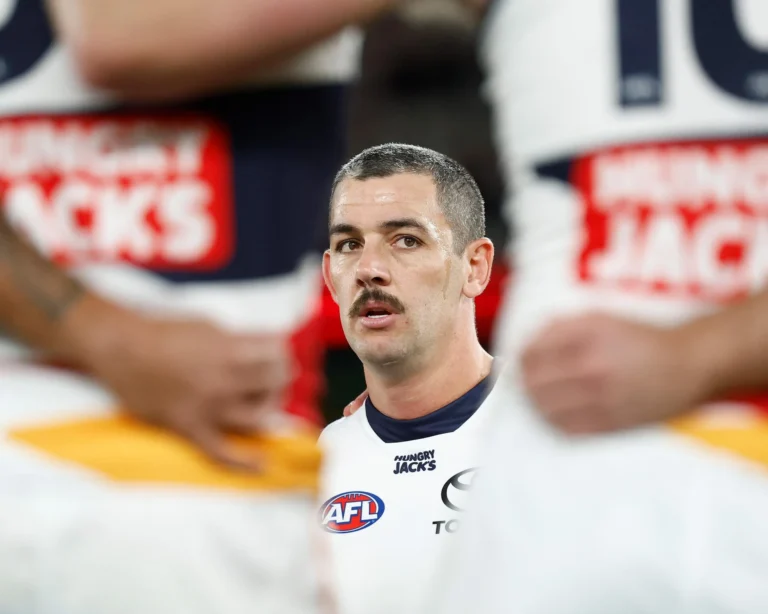
The AFL has entered its retirement season, a time during late winter when the pace of the league slows, allowing for reflection on the impending losses to the game. This period shines a light on the stars, beloved veterans, and unsung heroes, giving them a moment to step into the spotlight one last time.
During this time, achievements and accolades are revisited, career statistics are scrutinized for hidden insights, and highlight reels are examined for overlooked instances of brilliance. Challenges faced throughout careers are seen as integral parts of the journey, while youthful indiscretions are often recast as opportunities for growth.
Taylor Walker’s Journey
Taylor Walker’s journey in the AFL has been marked by a mix of triumphs and tribulations. He has delivered match-winning performances, suffered serious injuries, experienced form slumps, and made an off-field error that has cast a shadow over his legacy. Moreover, he provided vital leadership to his club and teammates during an unspeakable tragedy.
Career Statistics and Achievements
Statistically, Walker’s career is impressive. He dedicated 19 years to the club he idolized as a child, participating in 316 matches over 18 seasons, with the potential for more games depending on the Crows’ performance in this year’s finals series. As the club’s all-time leading goalkicker, he has amassed 706 goals, placing him second among current players and 27th in VFL/AFL history.
Among his accolades, the 36-year-old served as Adelaide’s captain from 2015 to 2019 and led the team to the grand final in 2017. He was named to the All Australian team for the first time at age 33, following a career-best season in 2023, where he scored 76 goals.
Challenges and Resilience
Highly regarded from a young age, Walker became Adelaide’s first NSW scholarship player at 16. However, he had to wait under coach Neil Craig before making his debut in round one of 2009. He had a breakout year in 2012, netting 63 goals in 19 matches, but suffered a ruptured anterior cruciate ligament the following year. After returning from injury, he was appointed club captain in 2015 by new coach Phil Walsh.
The unexpected loss to Richmond in the 2017 grand final, coupled with the controversial “The biggest thing that I learnt was that words don’t just hurt one person, they can hurt so many different people,” incident and a subsequent off-season team camp, disrupted the club for nearly a decade. Since then, Walker and the Crows have reached the finals only twice, both resulting in home losses last year that eliminated the minor premiers. The Broken Hill native also faced back issues and knee pain during a challenging 2020 season, which he feared would mark the end of his career. He managed just 15 goals in 14 games as the Crows finished at the bottom of the ladder.
A resurgence in 2021 saw him score 48 goals in 17 matches, but it was abruptly ended when he received a six-week suspension for racial vilification.
This incident shook the sporting community, particularly given Walker’s previous role as a respected leader during a difficult time six years prior. His uncomfortable apology video, filmed alongside the targeted player, suggested that he still had significant lessons to learn.
Farewell and Reflection
As is customary for retiring players, Walker was greeted with an emotional farewell from teammates and media alike. His press conference had to be relocated to a larger venue to accommodate the crowd, highlighting the affection for one of the Crows’ most cherished figures.
Amid the usual celebrations, laughter, and poignant moments, he took time to reflect on the offensive remark he made in August 2021, a blemish on his record. “I feel like I’m a better person for that mistake that I made. It’s one thing that I wish never happened, but also I feel like I’m in a position that I’m better for it.” Walker stated. “I feel like I’m a better person for that mistake that I made. It’s one thing that I wish never happened, but also I feel like I’m in a position that I’m better for it.”
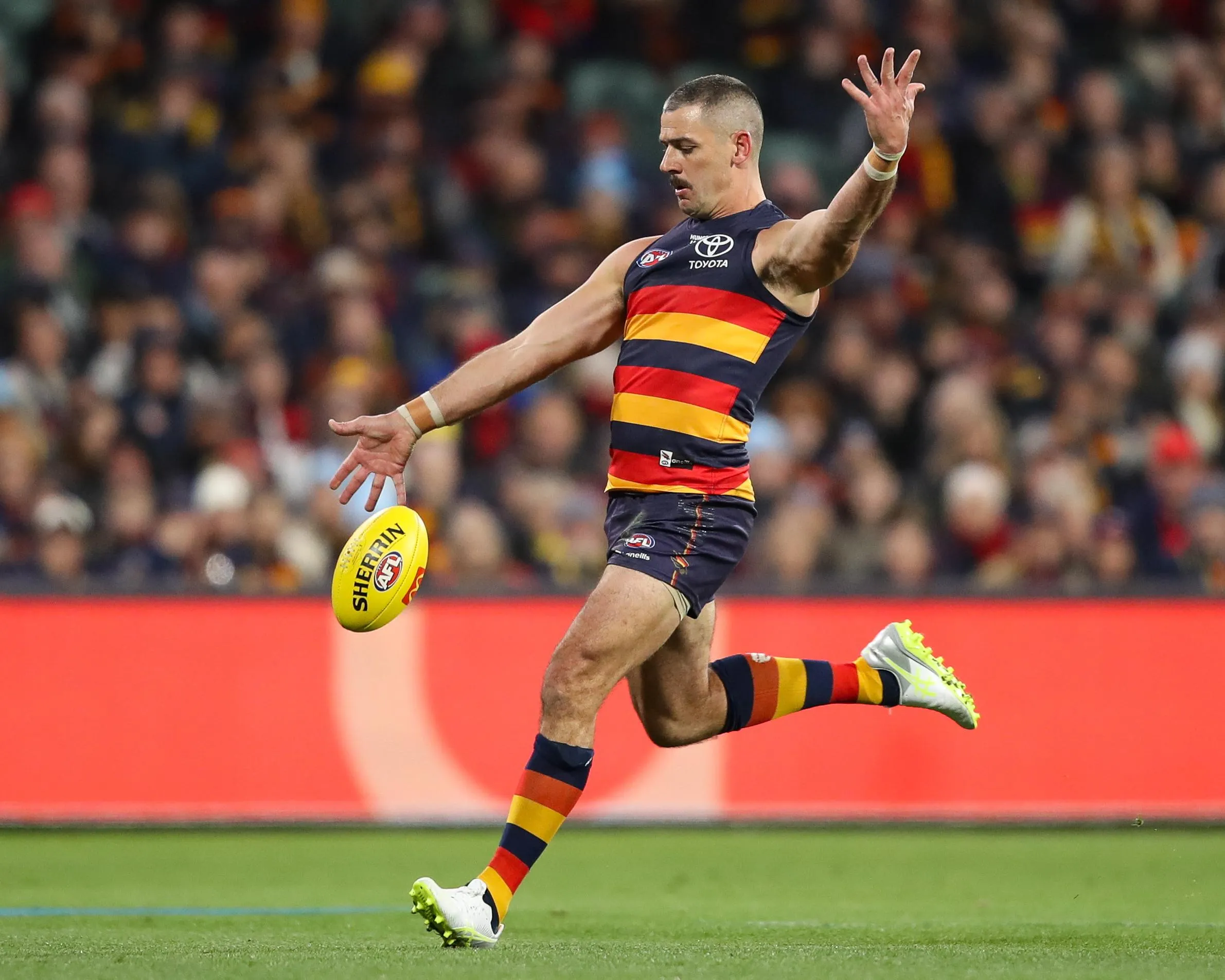
Walker is known for his exemplary ball grip and kicking technique, whether executing a powerful set shot or delivering precise passes with either foot. However, the most lasting impression of him is the strength and vulnerability he demonstrated after Walsh’s tragic passing, as he led his grieving teammates and the broader club in their subsequent match against Port Adelaide, as well as in the weeks that followed.
Despite facing numerous challenges, including injuries, form declines, and personal missteps, Walker’s enduring presence and tenacity are significant reasons to celebrate his career. His resilience and leadership, particularly following Walsh’s death — which occurred when the coach was killed by his mentally ill son — are what truly define his legacy as a remarkable figure in football.
- This is an extract from Guardian Australia’s free weekly AFL email, From the Pocket. To get the full version, just visit this page and follow the instructions.