


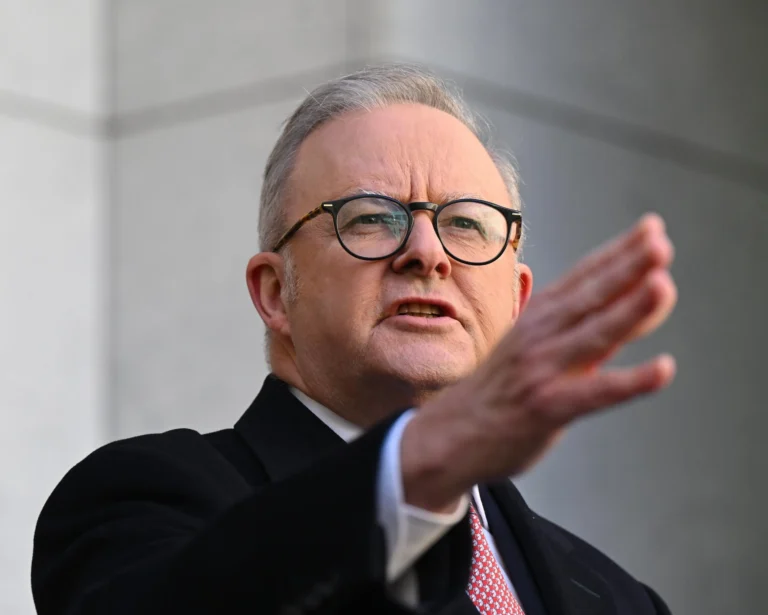
Following a week filled with serious allegations regarding the strategies employed by gambling companies to ensure punters continue losing money, David Pocock encapsulated the government’s stance with a single word.
Calls for Stricter Measures
Amid increasing momentum from the opposition and crossbench to challenge Labor on legislative changes, the independent senator from the ACT declared on Friday that it was a “publicity-seeking extremists” the government was not willing to adopt stricter measures to limit gambling advertising.
Pocock questioned why Prime Minister Anthony Albanese was obstructing strong public opinion and bipartisan support for more stringent laws, particularly after the significant report led by the late Labor MP Peta Murphy.
Allegations from Advocates
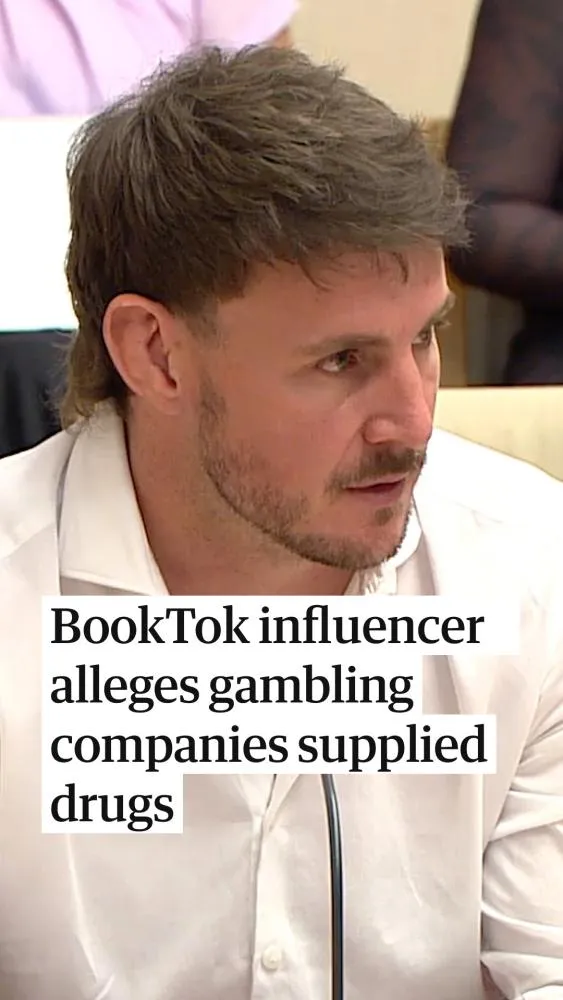
The issue gained traction following testimonies from veteran advocate Tim Costello and former NRL player Luke Bateman during a parliamentary inquiry. The evidence presented was notable, comparable to the past revelations surrounding Australia Post CEO Christine Holgate’s procurement of luxury gifts for executives.
Both Costello and Bateman claimed on Monday that VIP account managers supplied problem gamblers with cocaine, alcohol, sex workers, and luxury accommodations, all aimed at prolonging their gambling activities. Bateman estimated his personal losses at around $1 million, while Costello disclosed his support for a man currently incarcerated for stealing millions to sustain his gambling addiction.
Industry Response and Legislative Proposals
The industry lobby group, Responsible Wagering Australia, along with major companies like Sportsbet and Tabcorp, stated they had no evidence to support these allegations. However, critics of the government’s proposals recognized the mounting evidence could significantly increase pressure on Labor to take more decisive action to mitigate gambling-related harm.
Shadow communications minister Sarah Henderson and Greens spokesperson Sarah Hanson-Young indicated they would press the government to enhance its proposals to gain Senate support for the bill. All non-government factions regard Labor’s plan to restrict gambling ads on television to three per hour before 8:30 PM as inadequate, alongside bans on radio ads during school pick-up and drop-off times, and prohibitions on logos featured on player jerseys or promotional materials in stadiums.
Labor’s proposed legislation would also fortify the self-exclusion program known as BetStop and introduce an option for viewers to opt out of advertisements across online platforms and streaming services, termed the “triple lock” system.
Public Opinion and Political Pressure
A poll conducted by Essential last November revealed that 40% of voters favored a complete ban on all gambling advertising. Additionally, 23% supported advertising subject to heavy restrictions, while 28% advocated for moderate restrictions based on time of day and program type. Only 9% of respondents believed there was no need for the government to impose restrictions on gambling advertisements.
To advance the bill in the coming weeks, Labor requires support from either the Greens or the Coalition.
Yet, in light of robust community backing and a growing political initiative, the question remains: why won’t Albanese agree to implement more of Murphy’s recommendations?
These recommendations included an outright ban on all online gambling advertising, to be phased in over three years, with an immediate prohibition on inducements and inducement advertising.
By approximately 2026, all online gambling advertisements and sponsorships would be permanently prohibited in Australia, complemented by the establishment of a national online gambling regulator.
Impact on Sports and Media
In defending the right for individuals to engage in gambling, Albanese argues that the most popular sports leagues in the country, including the AFL and NRL, would suffer if the government were to impose further restrictions or bans on gambling ads. He contends that community sports would be adversely affected as funding from national leagues to local competitions would diminish. Additionally, the prime minister highlights that media organizations heavily depend on the revenue generated from these advertisements.
The extent to which influential figures like Peter V’landys, chair of the Australian Rugby League Commission, and Andrew Dillon, AFL chief executive, impact Albanese’s stance remains uncertain. Both leagues declined to participate in the inquiry, and when pressed for an explanation, V’landys made disparaging remarks about elected officials, labeling the committee as “publicity-seeking extremists.”
Sponsorship and Financial Implications
Recent research released by the Foundation for Alcohol Research and Education (FARE) revealed that every NRL club and five AFL clubs are sponsored by gambling firms, with both leagues generating tens of millions from sponsorship deals, including revenue from all bets placed on their games.
These sponsorship agreements reportedly value up to $50 million annually for the NRL and between $30 million and $40 million for the AFL, according to FARE.
Some members within Labor perceive that Albanese might be overlooking public sentiment regarding this issue. Notably, a group of Labor backbenchers, including Louise Miller-Frost and Alicia Payne, expressed to Guardian Australia their desire for the government to adopt a more aggressive approach. Both Hanson-Young and Liberal Simon Kennedy have been instrumental in fostering growing momentum within their parties, and the push in Parliament is gaining traction.
The potential for the Coalition, the Greens, and independents, including Pocock, to orchestrate a Senate defeat for Labor, similar to the aged care funding debacle last September, could sharpen focus within the party. Communications Minister Anika Wells has indicated that productive discussions are already underway, and the Coalition’s party room meeting on Tuesday could be pivotal.
While action regarding inducements is feasible, there is a rising consensus among both the Coalition and Labor for an opt-in advertising system, replacing the current regulations that allow account holders on streaming platforms to indicate a preference to avoid gambling advertisements. Responsible Wagering Australia’s Kai Cantwell stated this week that the industry would reject an opt-in system.
Crucial Labor reforms, such as plain packaging for cigarettes and efforts to ban tobacco advertising initiated by the Whitlam government, outline a potential path forward for Albanese, especially as the current proposals struggle to find support in the Senate.