


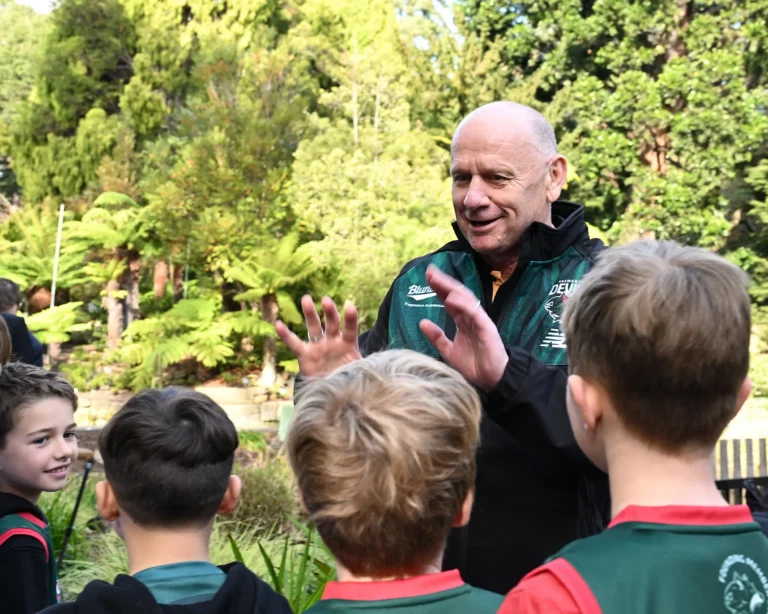
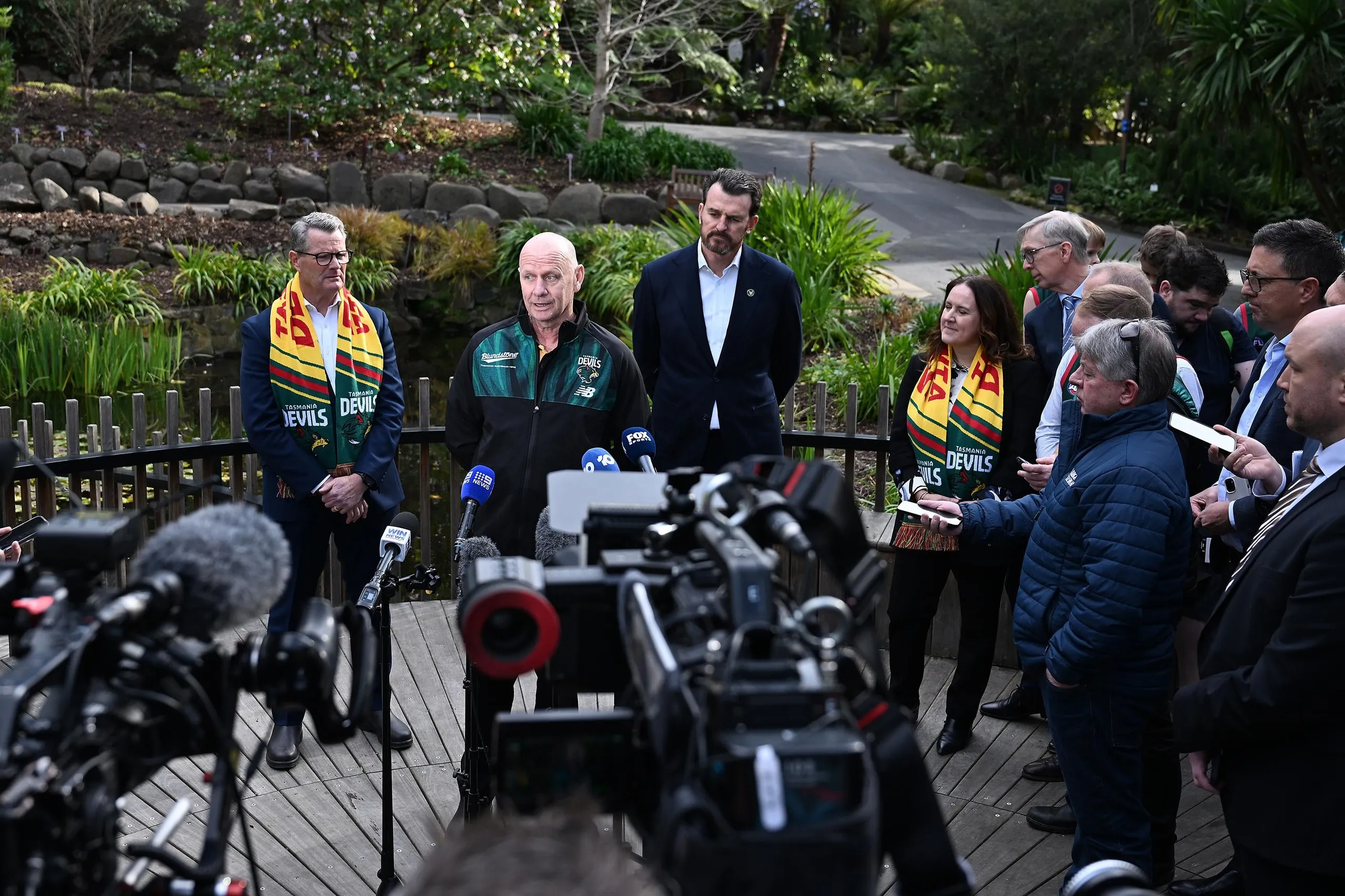
Ken Hinkley was clearly in his element as he spoke in the Royal Tasmanian Botanical Gardens, engaging with journalists and showcasing his newfound local flair. He adeptly shifted to a collective mindset, employing phrases like ‘we’ and ‘us against the mainland,’ and even referenced his Tasmanian identity. His departure from Port Adelaide felt meticulously orchestrated, yet he radiated eagerness to return to the field.
Hinkley’s Selection as Tasmania’s Inaugural Coach
To grasp Hinkley’s selection as Tasmania’s inaugural coach, one must consider those who were overlooked. Nathan Buckley emerged as an early frontrunner but appeared to lack the charisma required to promote the team effectively, as noted by Devils CEO Brendon Gale. Meanwhile, John Longmire, who led a team to five grand finals, enjoys a comfortable position with the Sydney Swans and seems more at ease than ever. Both Buckley and Hinkley appeared more willing to upheave their lives, relocate to the island, and cultivate a new team from the ground up.
Coaching Record and Challenges Ahead
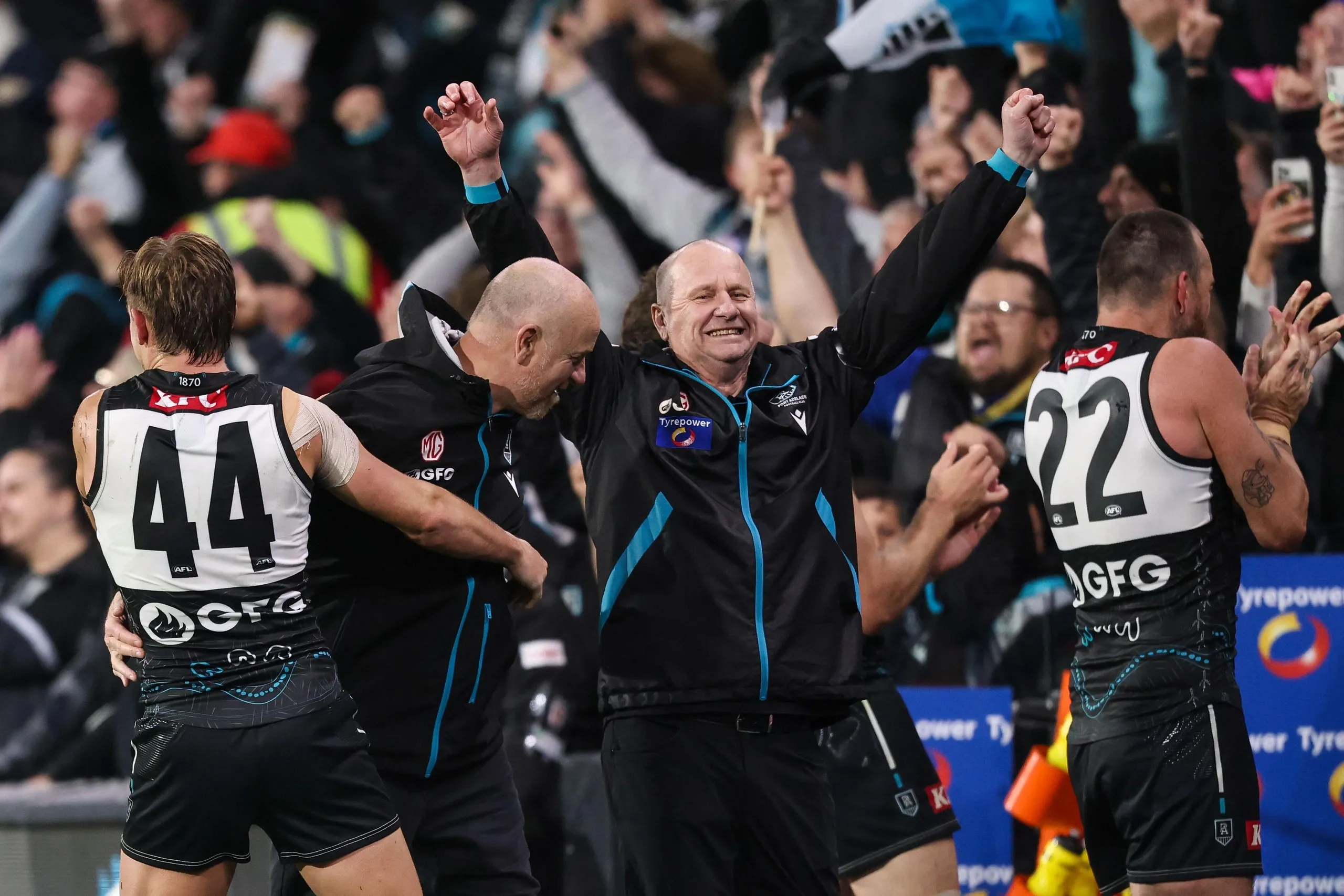
This week’s announcement felt like an affectionate gathering, with numerous mentions of Hinkley as a father figure and master connector—claims that cannot be disputed. However, his coaching record has sparked debate over the years, not just from disgruntled Port supporters. When Hinkley took charge, the club was in turmoil, having won only eight out of their last 44 matches. He revitalized them, achieving nearly a 60% win rate, convincing many players of their potential. Yet, he never quite reached the pinnacle, hindered by both his own rigidity and external factors. His teams often seemed to lack a crucial element—a stroke of luck, additional key players, or a more adaptable strategy. In significant matches, formidable opponents like Clarkson, Hardwick, or Beveridge consistently thwarted their ambitions, exploiting weaknesses with strategic precision.
Hinkley was known for his attacking style as a player, embodying the essence of a Malcolm Blight disciple—prioritizing instinct and talent over opponents. However, this exuberance sometimes worked against him in high-stakes games. His teams played with emotional intensity and were often easy to analyze and counter. The closest they came to success was a heart-wrenching preliminary final defeat to Richmond in 2020. The following year, they entered the match against the Western Bulldogs as favorites but faltered dramatically within the first ten minutes.
Nonetheless, none of these factors disqualified Hinkley from the Tasmania position. The role required someone capable of winning over local sentiment, which he achieved in a mere 20 minutes. It also necessitated fostering a siege mentality, something the Gold Coast Suns have struggled to establish. Additionally, Hinkley needed to connect with young players, nurturing and retaining their talent, while also crafting a compelling narrative for managers, parents, and the broader community. In this regard, Hinkley is exceptionally persuasive.
When Hinkley expressed his desire to become a coach, his mentor Blight advised him to take on the weakest country team to test his passion. This new role, however, vastly differs from that initial challenge. He will benefit from substantial draft advantages and will be coaching in a region where football holds significant importance. However, the task will not be simple. The training and administration center is not expected to be completed by the start of the 2028 preseason, and the political landscape in Tasmania remains uncertain. Various issues linger regarding the stadium, its roof, the economic environment, and the state’s financial capacity to support these initiatives.
Currently, the market for senior coaches is favorable for buyers. Three former premiership coaches are available, along with Buckley, who has led his team to a grand final and a preliminary final. A strong pool of assistants is also in contention for various roles, in addition to the unique case of James Hird. Each club is seeking something distinct; Essendon desires someone with a strong club affiliation, while Carlton aims to avoid past mistakes. Richmond and North Melbourne may eventually look for someone who can build on the foundational work of their rebuilds.
For Tasmania, the requirements were different. “I don’t know too much else.” Hinkley told Gale during their initial meeting. “I don’t know too much else.” He may have underestimated himself, and both men recognized that this role entails much more than merely coaching football. This complexity is precisely what makes Hinkley the right choice for the job.
- This is an extract from Guardian Australia’s free weekly AFL email, From the Pocket. To get the full version, just visit this page and follow the instructions.