


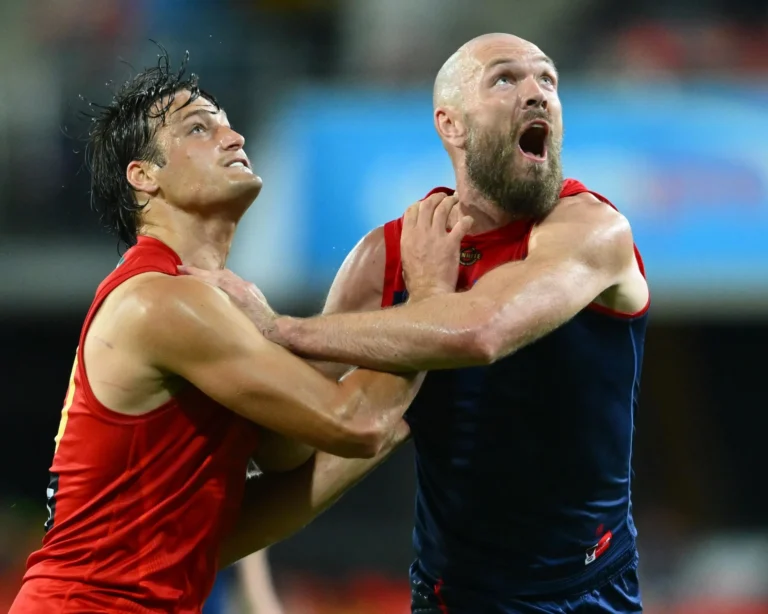
Within the Australian Football Hall of Fame, over 300 individuals have been honored, including numerous players who could be classified as “Having been a beneficiary of his ruckwork at ground level,” Among the 34 elevated to Legend status, six are ruckmen: Roy Cazaly, Jack Dyer, Merv McIntosh, John Kennedy Sr, Polly Farmer, and John Nicholls.
Recently, a player demonstrated the qualities worthy of being mentioned alongside these legends. Max Gawn has strong claims to being recognized as the top ruck in the sport’s history. For a decade, he has held the title of premier ruck in the league, experiencing a journey where his team has rebuilt, conquered challenges, and faced ups and downs. During this time, the league has introduced rule changes that have altered the ruck role, making some players obsolete. Every opposing coach makes it a priority to strategize against him, with Ken Hinkley’s Port Adelaide often looking to intimidate him, while Chris Scott’s Geelong seeks alternative tactics. Each season brings a new contender for his title, yet it remains Gawn who dons the All Australian blazer.
Historical Context of Ruckmen
Before Gawn, Simon Madden was widely acknowledged as the best ruck of the last fifty years. Tim Watson remarked.
“the ball would land like a snowflake on the hot bonnet of a car.”
The Essendon great competed against notable players, including Rhodes scholars, Brownlow medallists, and even his brother. He triumphed over them all, playing in an era when rucks frequently clinched Brownlow medals by positioning themselves strategically and benefiting from less sophisticated ball movements. With his athletic ability, skill, goal-kicking, and longevity, Madden is celebrated as the best of his time.
Comparative Analysis of Ruck Legends
The two other leading candidates hail from the generation preceding Madden. Many who witnessed Farmer in action in Western Australia and Victoria regard him as the greatest footballer they’ve ever observed. By the time he arrived in Victoria, he had already secured two Sandover medals (and would later win a third retrospectively) and seven club best and fairest awards. He added two more club champion awards at Geelong and was widely considered the best player in the 1963 grand final by many sports writers. His biographer, Steve Hawke, noted that “his mastery of the art of football came through a combination of instinct, theory, and practice, practice, practice”
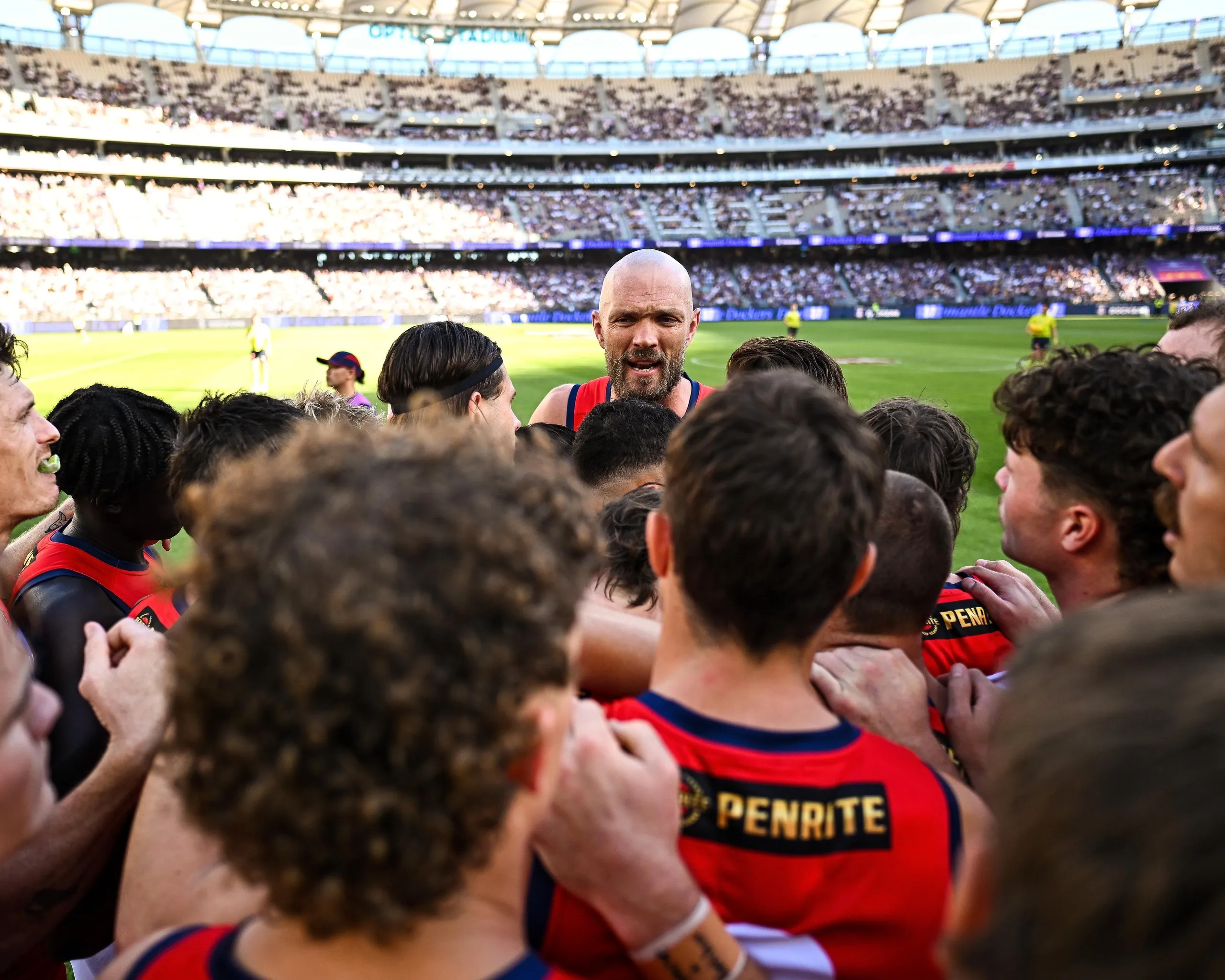
Nicholls played a different role compared to Gawn. Although he shared the same height as Scott Pendlebury, his physicality was remarkable, with thigh circumference rivaling that of substantial structures. Mike Brady even composed a song about his striking blue eyes. He earned five club champion awards with strong Carlton teams and was a runner-up on four occasions. John Schultz, who won a Brownlow and faced both players, stated that Farmer slightly outperformed Nicholls. Sam Newman, whose insights on ruckwork are highly regarded, consistently claimed that Farmer was the best and most influential player in the game. In 2008, Mike Sheahan was tasked with identifying the top 50 players of all time, ranking Nicholls at seventh and Farmer at eighth.
Gawn stands apart from those three ruckmen, not solely due to the evolution of the sport and its roles. His style exhibits a calm efficiency; he conserves energy and avoids unnecessary movements. He is the type of player who gradually becomes more engaged in the game, assessing the contest’s pace, identifying weaknesses, and delivering impactful plays – whether it’s a pack mark, a well-placed thump forward, or a clever remark directed at opponents. He excels in off-the-ball activities, such as providing defensive support, enduring hits, pushing forward, blocking space, and engaging in every possible contest.
When the situation demands a robust approach, he can launch the ball 30 meters. If his midfielders are struggling, he will initiate set plays, creating space for them to exploit and skillfully palming the ball. In fast-paced games, he integrates into possession chains. When a game requires tempo control, he positions himself behind the ball, ensuring he is always in the line of sight of opponents. During the recent match against the Gold Coast, he was frequently a looming presence, stepping in to counteract, spark action, stabilize the game, and strategize. After experiencing a series of questionable free kicks, he transitioned into what some call “Angry Max mode.”
While comparing players across different eras can be entertaining, it often proves futile, especially for ruckmen due to rule changes, the varying demands of each period, and shifts in player physiques and roles. I could analyze various achievements and formulate an opinion, and I believe he has surpassed Madden as the top ruck of the last fifty years. However, I hesitate to assert that he is superior to Farmer and Nicholls, given my limited perspective. Nonetheless, by every standard, he is a monumental figure in his discipline, position, era, and the sport itself.
- This is an extract from Guardian Australia’s free weekly AFL email, From the Pocket. To get the full version, just visit this page and follow the instructions.