


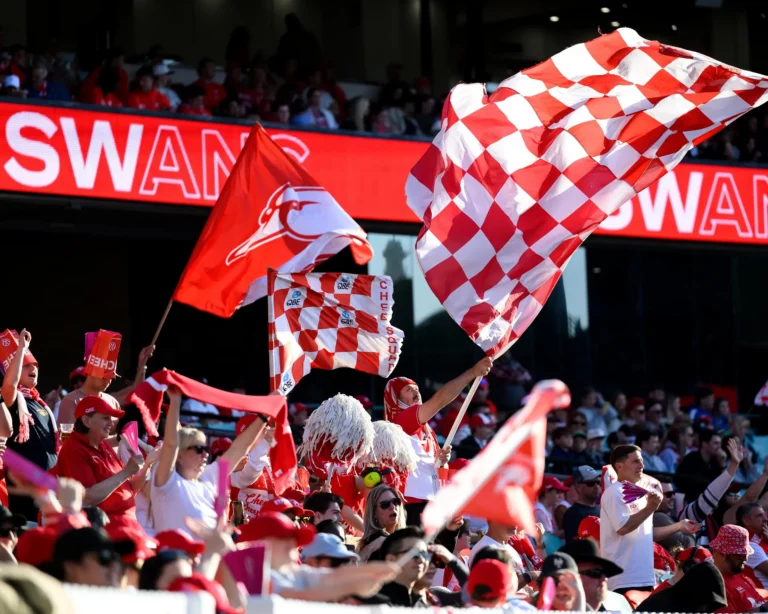
The Sydney Swans scandal has sparked a significant public outcry, with reactions predominantly fueled by outrage. This response is perhaps understandable, given that one in five Australian women has faced sexual violence since turning 15.
When the narrative involves athletes, women, alcohol, and alleged assault, it often leads to preconceived conclusions: privileged players, and women as collateral damage in yet another failing of sports culture.
While it is commendable that society’s discomfort with such behavior has intensified, there is a critical distinction between heightened sensitivity and jumping to conclusions before the facts emerge.
As we await the outcome of an investigation into an alleged sexual assault, it is pertinent to ask: what exactly are we angry about?
Is it the late-night outings? The drinking? The involvement of adult entertainers? Bringing women to the team hotel during finals preparations? Disappointing teammates? Or simply getting caught?
These elements have fueled public sentiment, but should it turn out that no crime was committed, we need to clarify what exactly went wrong.
Perspectives from the Football Community
Conversations with individuals connected to the football scene reveal varying perspectives. For some, the issue isn’t the party itself or the adult entertainers but the audacity of returning to the team hotel during a crucial moment of the season.
Others contend that such behavior is acceptable after the season ends—drinking, partying, hiring adult entertainers is permissible, just not at this critical juncture. This introduces an unsettling notion: behaviors that many find shocking may not be viewed the same way within certain football circles. For some, the real transgression was the timing, location, and the subsequent exposure.
Club’s Response and Standards
However, the Swans organization has evidently deemed that a boundary was crossed. Five players have been suspended for the remainder of the season, including the finals, due to breaches of club standards, while a Victoria police inquiry into the alleged assault continues.
If given the chance, I would ask the Swans administrators to clarify: what exactly delineates that line for you? The club has stated that its disciplinary actions are distinct from the police investigation and pertain to violations of its standards. No arrests or charges have been made, and the five players reportedly deny any criminal conduct. Yet, the specific parameters of that line remain publicly ambiguous.
There’s an important distinction between violating a specific contract clause, breaching team protocols, and failing to meet a broader behavioral standard that requires subjective judgment from the club.
Public Sentiment and Cultural Reflection
This also applies to the rules concerning bringing women or other guests to a team hotel. Such regulations may revolve around security, player welfare, privacy, and reputation. The reasoning behind these standards is crucial; otherwise, the term ‘standards’ risks becoming a vague moral guideline without thorough examination.
The visceral responses from parents, fans, and the public this week have been striking: it feels wrong, seedy, and unacceptable. This visceral reaction shouldn’t be trivialized as mere moral outrage. Perhaps this discomfort indicates that our expectations go beyond just what is legal. However, discomfort alone cannot define the standard. If it justifies the suspension of five players, we must articulate what that line is, the harm it aims to prevent, and the values it seeks to uphold.
Amid the genuine emotions, our discourse seems tangled in three distinct conversations. The first pertains to the criminal threshold: whether a crime was committed. The second concerns workplace standards: the nature of the breach, the rationale behind it, and whether the consequences were appropriate. The third is the more ambiguous cultural threshold: what behaviors are accepted, tolerated, or normalized long before crossing the previous two lines.
We often conflate these discussions as if they were the same, but they are not. The absence of criminal charges does not negate a workplace violation. Addressing a workplace infraction does not resolve the underlying cultural issues. This might be the source of our discomfort.
It’s not just about one night’s events, but what they reveal about a prevailing male sporting culture, where excessive drinking and the objectification of women coexist with camaraderie, celebration, and the release of stress—and how much of this is tolerated until a serious issue arises.
Not everything that shapes a culture is illegal. Legal standards represent an extremely low threshold for cultural norms.
Another viewpoint is that athletes aren’t moral paragons; they are simply sportspeople. We shouldn’t expect young men, skilled at playing football, to embody our values or guide our children.
However, the industry markets them differently. It capitalizes on their personalities, narratives, reputations, and the emotional connections fans have with them. Brands invest in footballers not only for their performance but for the influence tied to their persona. One cannot profit from someone’s influence and then dismiss it when it becomes inconvenient.
This complexity may explain why this issue has become a Rorschach test for opinions. Some perceive it as a matter of violence against women, others see entitled athletes, some view it as employees failing their workplace responsibilities, while others recognize a toxic culture. There are those who regard it as adults making private decisions that became embarrassingly public.
Each of these perspectives requires distinct solutions. If criminal charges emerge, there is a legal process to follow. However, if they do not, those who felt a strong, immediate sense that something was amiss will have to grapple with whether nothing was wrong after all, or finally clarify what precisely sparked their anger.
Because if we cannot articulate what was truly wrong, beyond what may or may not have been illegal, our chances of effecting meaningful change are minimal.
- Rana Hussain is a sports broadcaster, inclusion consultant, and director at Basketball Australia.
- Support and information for those affected by sexual violence can be accessed through various organizations. In Australia, Full Stop Australia offers assistance at 1800 385 578. In the UK, Rape Crisis provides support at 0808 500 2222. In the US, Rainn can be reached at 800-656-4673. Additional international helplines are available at ibiblio.org/rcip/internl.html.