


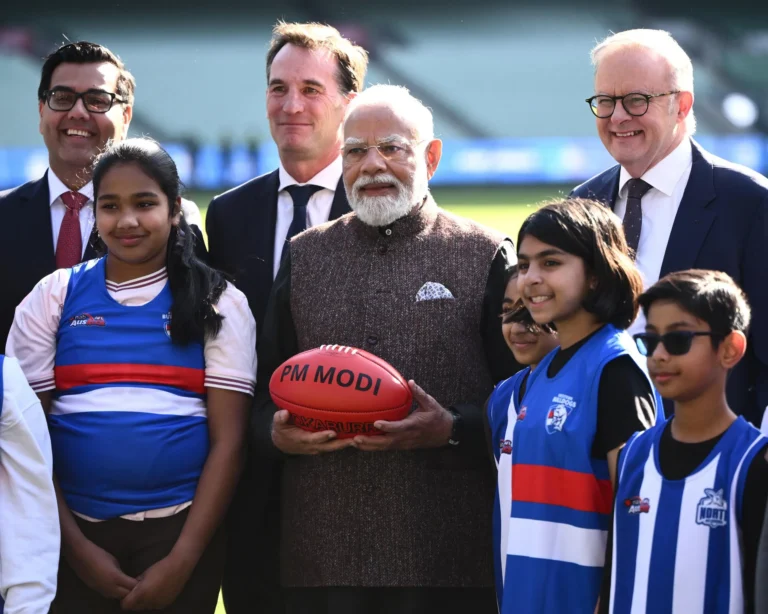
The AFL’s recent initiative to expand its international footprint by focusing on India is infused with optimism, though its success is not guaranteed. AFL chief Andrew Dillon, alongside Prime Minister Anthony Albanese and India’s visiting Prime Minister Narendra Modi, revealed a long-term vision aimed at strengthening ties between the two nations while promoting the sport.
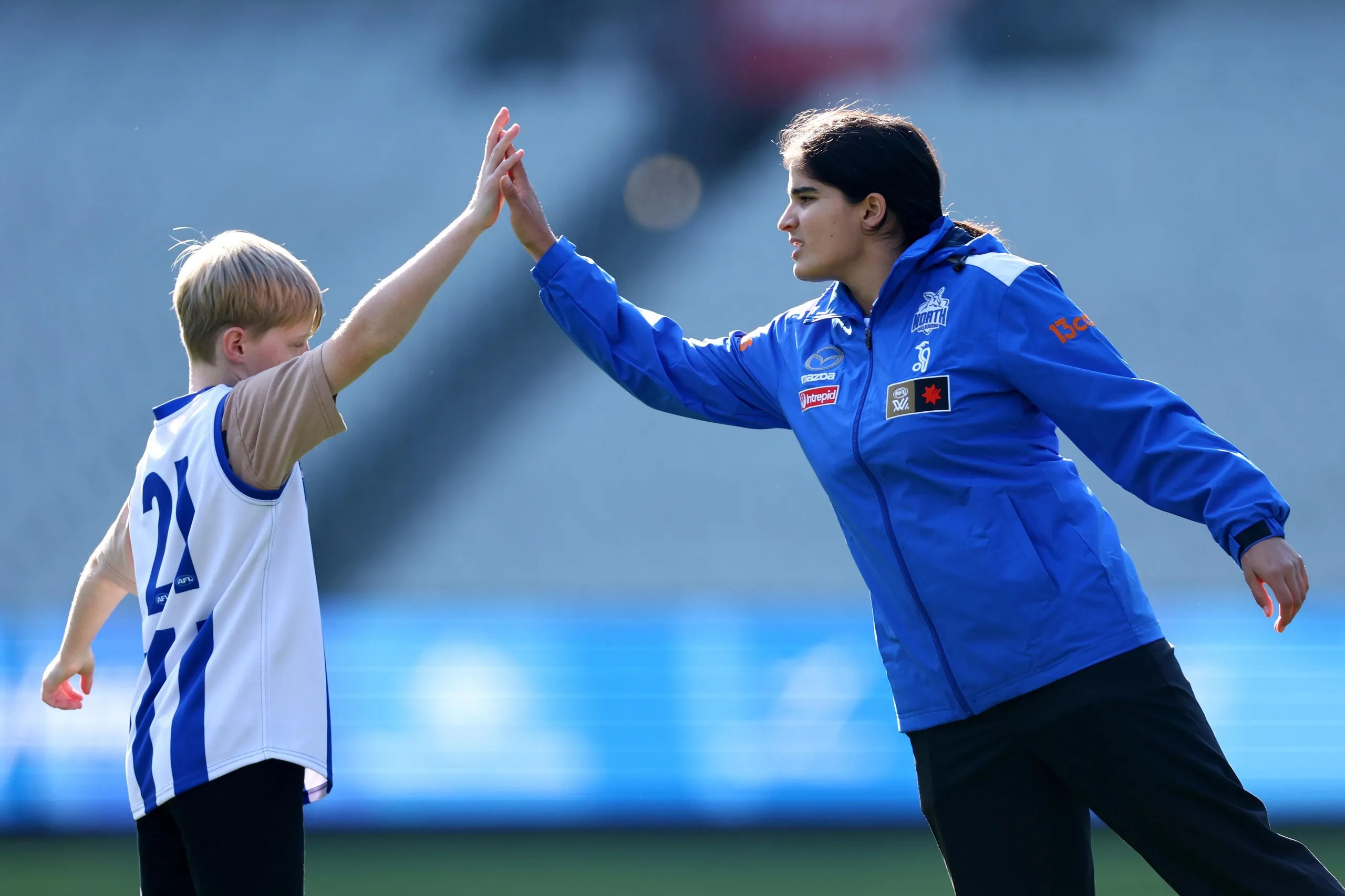
With aspirations to register over 100,000 participants in India within the forthcoming years, the AFL is taking charge, building on the grassroots efforts of local volunteers and community leaders who have cultivated interest in the sport since its introduction in 2008. To date, more than 20,000 individuals have engaged with Australian rules football, highlighting significant potential for growth in the world’s most populous country.
The AFL’s comprehensive strategy, which it identifies as its fastest-growing international market, will focus on enhancing youth and grassroots involvement through educational institutions, coaching initiatives, and umpiring programs. Plans also include the establishment of an AFL India talent academy, bolstering national competitions and pathways for representation, and promoting women’s and girls’ participation and leadership. The league aims to distribute tens of thousands of Sherrin footballs and other equipment to local communities, with the ambition of making Australian rules football a staple in every Indian state and school.
The AFL’s current approach might yield different results, as it seeks to build a foundation rather than merely staging elite matches in an unfamiliar market. India’s deep-rooted passion for sports offers a unique opportunity, particularly since Australian rules football was originally developed over 160 years ago to maintain cricket players’ fitness during off-seasons. Both sports continue to be played on oval fields that may often be shared. Although cricket grounds in India are typically exclusive to cricket, the announcement by Dillon, Albanese, and Modi took place at the iconic Melbourne Cricket Ground, underscoring this connection.
As the AFL ventures into this new market, it is also making strides to engage Australia’s rapidly growing Indian diaspora. Initiatives such as Hindi broadcasts of AFL matches, the AFL Khel digital media channels, the Next Generation Academy, a cultural heritage series, and the AFL community and school connect program are part of a broader strategy. This is particularly relevant as the national population of approximately 27.6 million includes 971,020 individuals born in India, making them the largest group of overseas-born residents for the first time, surpassing those from England.
Despite the growth in the Indian-born population from an estimated 449,040 in 2015, this demographic shift has not necessarily translated into a stronger presence for Australian rules football at the local level or within the AFL. Observations indicate that some local clubs in traditional AFL strongholds are becoming weaker as cricket teams gain prominence, reflecting changing population demographics and their associated sporting interests.
Currently, the AFL is yet to witness a player with both parents of Indian descent participate in its top tier. Jai Saxena was recently drafted by Collingwood, making him just the second player with dual Indian heritage to join an AFL roster, although he has yet to make his debut. Balraj Singh was drafted by Adelaide in 1999 but was released without playing a senior match. Daniel Kerr stands out as the most notable player of Indian heritage to reach the elite level, alongside others like Ben McNiece, Alex Morgan, Blaine Boekhorst in the AFL, and Zoe Savarirayan in the AFLW.
The Western Bulldogs have expressed interest in being one of the clubs to play a match for premiership points in India, pending the AFL’s commitment to expanding in the region. The league is rightly investing in both domestic and international initiatives as it seeks to cultivate new supporters and redefine the future of the sport.
- AFL
- Australian rules football
- Australia sport
- analysis