


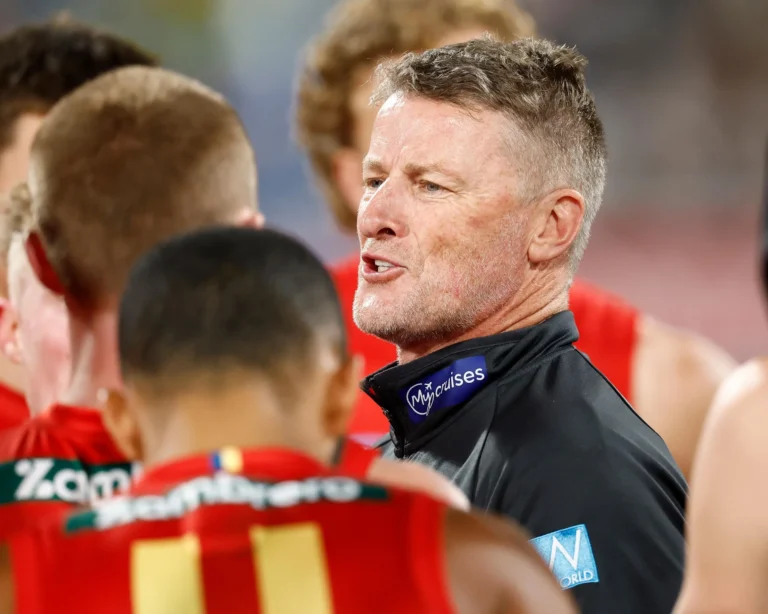
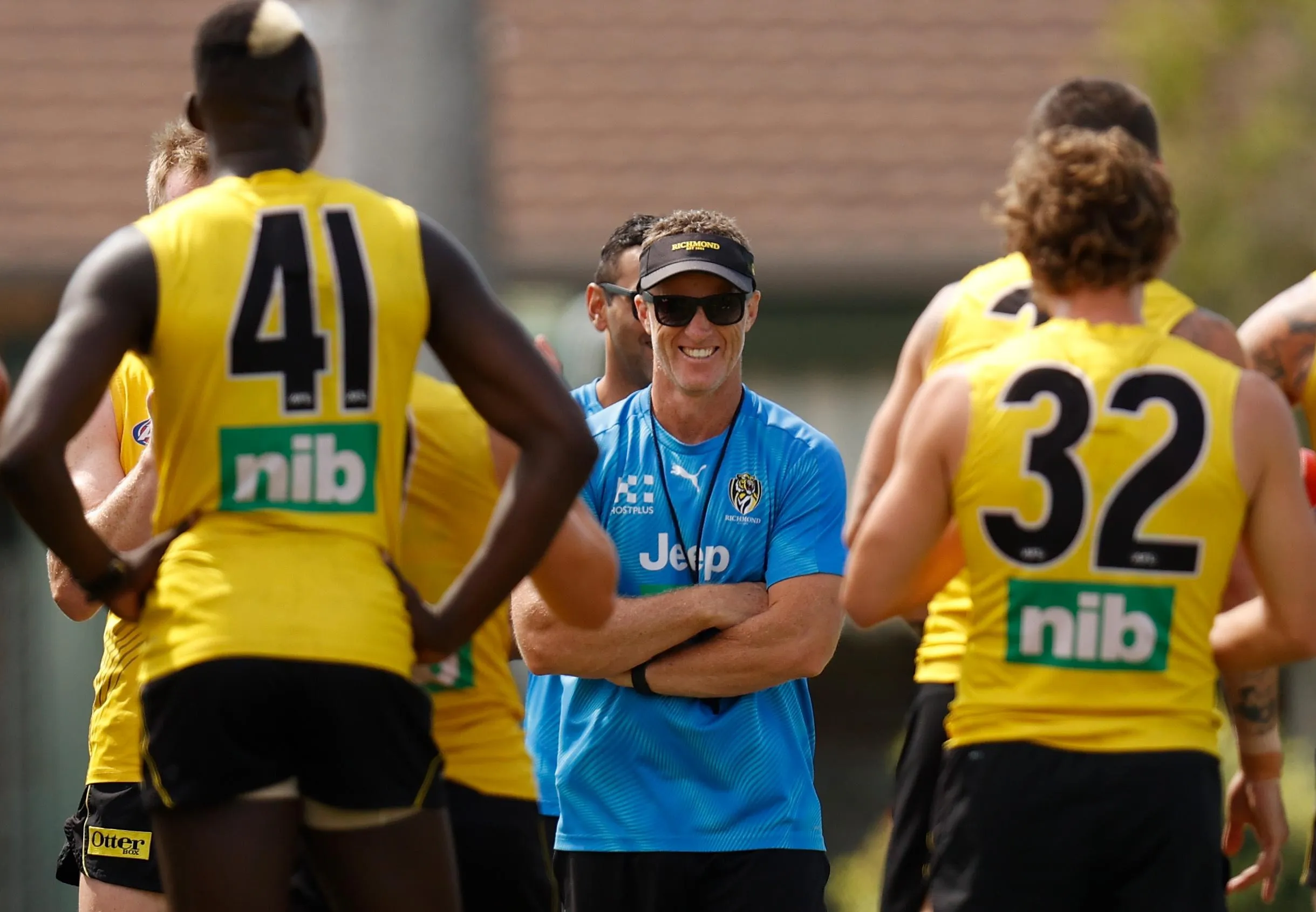
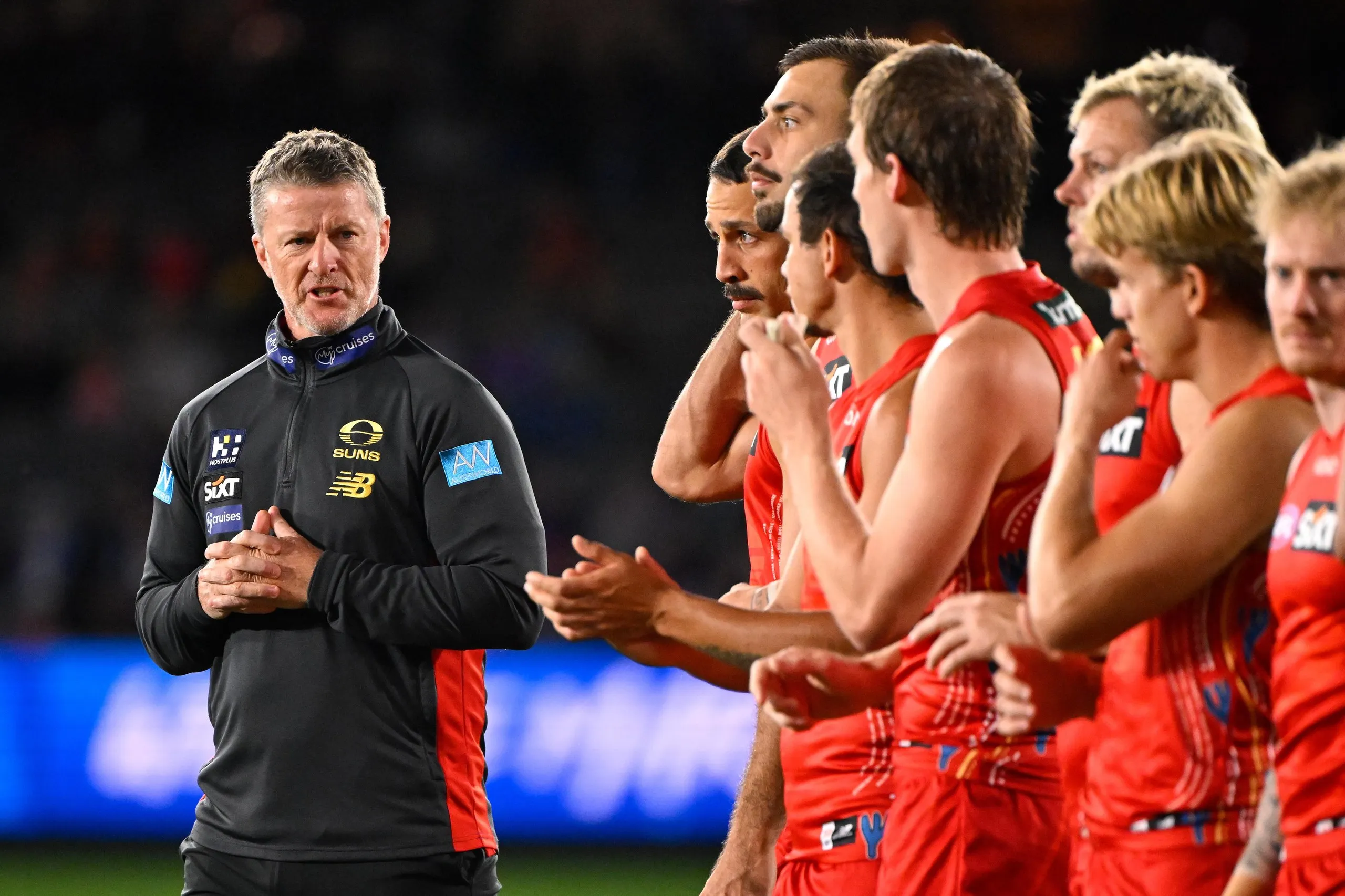
Damien Hardwick expressed his frustrations last week, criticizing the officiating and the rowdy Geelong crowd. Over the years, various issues have sparked his displeasure—umpiring, regulations, fixture scheduling, trade rumors, panel discussions, media scrutiny, and political correctness. While some may find his complaints excessive, it’s important to recognize that passionate coaches often voice their opinions and detest losing. In the absence of strong leadership from the AFL, coaches are frequently positioned to advocate for change. Those with multiple premierships tend to be more vocal in their criticisms, as seen with Chris Scott’s nuanced passive aggression contrasted against Hardwick’s more direct approach.
Hardwick counters the notion that he and the Gold Coast Suns have been given an easy path, insisting, “Mate, we don’t get much,” a sentiment he voiced last year. Despite this, he has benefited from some of the most favorable fixtures imaginable. He boasts a roster with numerous top-10 draft picks, half of which were top-three selections, along with the advantages of the Suns academy. Additionally, he leads a team that includes the reigning Brownlow medallist, a former Norm Smith medallist, and the current Coleman medal leader. So, why does the situation feel stagnant? Why are so many players seeking to leave?
During his deliberation about accepting the coaching role, Hardwick found himself in the picturesque Cinque Terre region of the Italian Riviera, researching players he was unfamiliar with. The allure of the role was undeniable—the potential of the squad, the pleasant climate, and the challenge ahead. He envisioned a life free from media speculation about his personal life, harsh winters, and the need to create new narratives for a fatigued team.
However, Hardwick’s experience at Richmond provided him with resources that he currently lacks at the Suns. At Richmond, he achieved a delicate equilibrium between compassion and ruthlessness, balancing star players with those who played crucial supporting roles. The team was adept at wearing down opponents and maintaining a clean and organized environment post-match. He had what he termed “perimeter players”—energetic runners patrolling the wings, small forwards maximizing space, and defensive midfielders who handled the heavy lifting for the stars. The likes of Kane Lambert, Jack Graham, and Jason Castagna would be acknowledged by Dustin Martin in his Hall of Fame speech.
At the Suns, Hardwick faces a different reality. His roster is populated with what he calls “trudgers”—players whose intensity and drive fluctuate. He notes a surplus of leaders but a deficiency of diligent workers. Consequently, when key players like Matt Rowell sustain injuries during state matches, or if Noah Anderson’s performance dips slightly, or Jarrod Witts finds himself impacted by new regulations, the fragility of the supporting players becomes glaringly apparent.
Yet, Hardwick’s most significant hurdle transcends tactics and player roles and strikes at the heart of the club itself. At Richmond, he focused solely on his players, having established a firm connection with them over several years. The identity of Gold Coast is questionable; it resembles more of a franchise or a program than a traditional club. His desired style of play, characterized by its frenetic pace and chaos, depends on complete commitment from the entire team. However, it proves challenging to foster that spirit when star players are tempted to leave and their agents are actively engaging with the media.
Hardwick is a polarizing figure, yet he ranks among the most accomplished coaches in the sport’s history. His halftime speech during the 2020 grand final exemplifies his effectiveness. In just two minutes, he demonstrated that a coach doesn’t need to be a charismatic speaker or an extreme personality to command respect. It was a moment filled with clarity, calmness, and unity.
Despite his success, Hardwick is also prone to anxiety. He keeps a notebook next to his bed, jotting down thoughts, concerns, and ideas that come to him during the night. His sleep is more restless when the team struggles in the standings. At Richmond, he often referenced the Zen saying, “chop wood, carry water,” emphasizing the importance of hard work and simplicity. He enjoyed stable leadership, a disciplined team dynamic, and the presence of talents like Dusty. Initially, he claimed that the task at the Suns appeared more straightforward, as he had numerous talented players to utilize effectively. However, he now realizes the complexity of his challenge—fostering connections among players, persuading them to remain loyal, and ensuring enough of them are willing to undertake the necessary hard work.
- This is an extract from Guardian Australia’s free weekly AFL email, From the Pocket. To get the full version, just visit this page and follow the instructions.
- AFL
- From the Pocket: AFL Weekly newsletter
- Gold Coast Suns
- Australian rules football
- Australia sport
- newsletters