


For much of my life, I have harmoniously navigated my identities as an Indian, a Muslim, an Australian, and a sports fan. However, this delicate balance faced disruption recently.
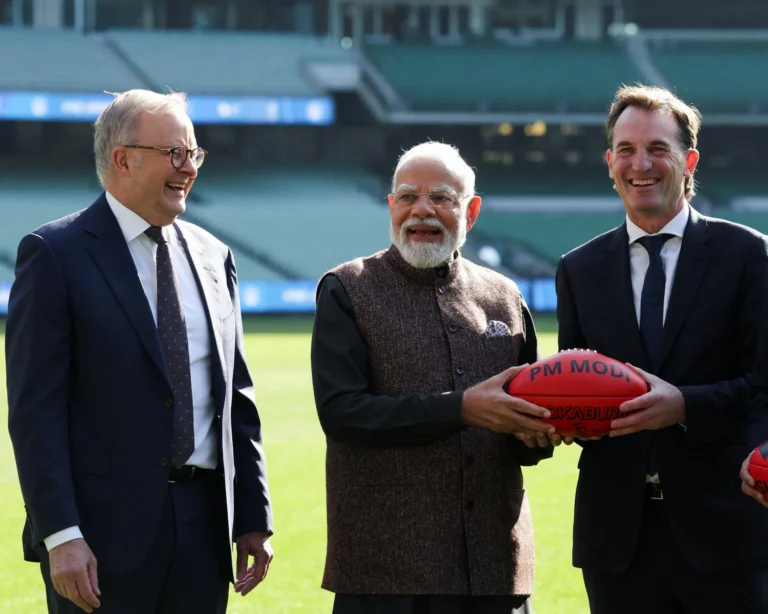
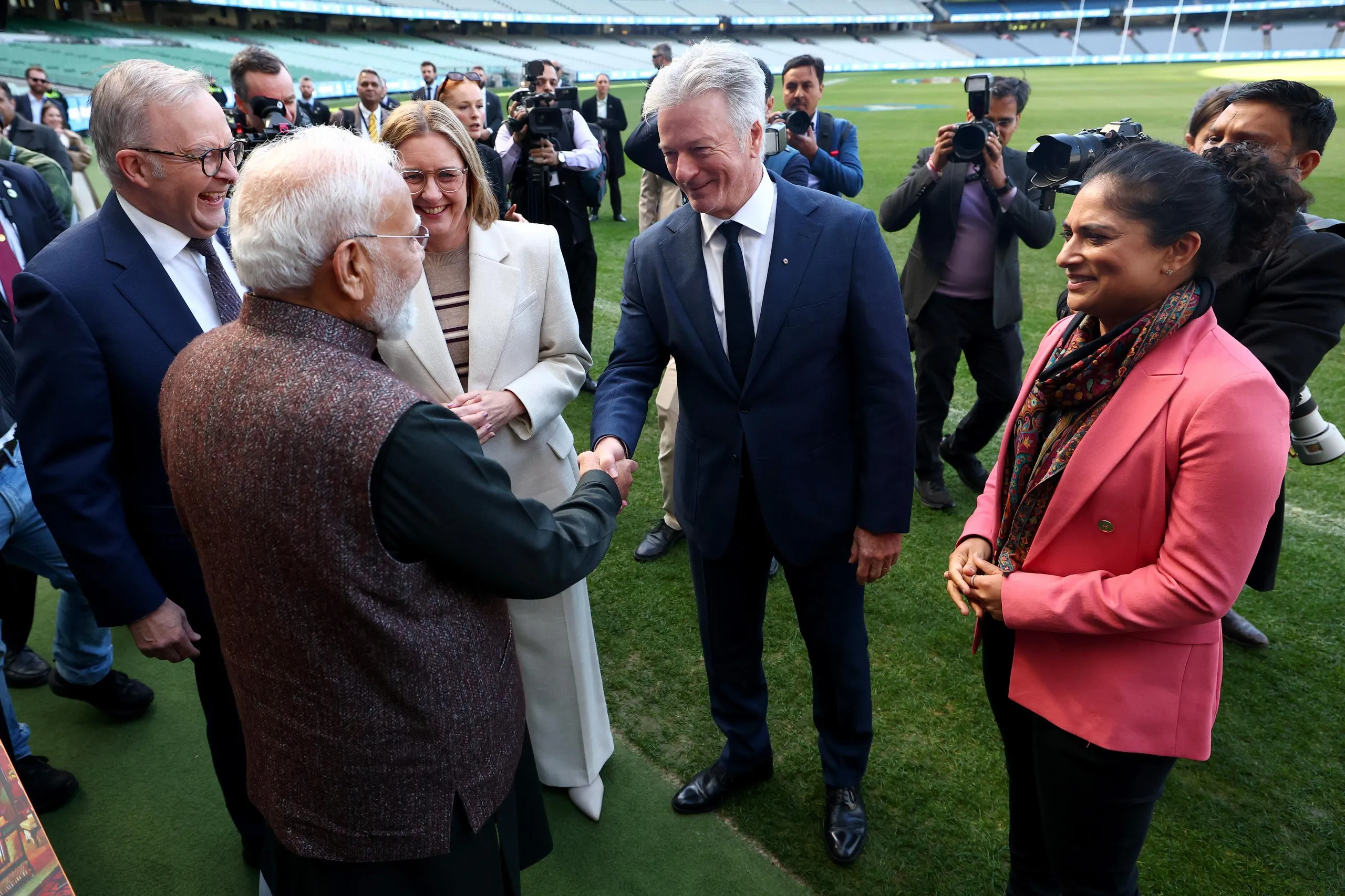
Observing AFL CEO Andrew Dillon and cricket legend Steve Waugh smiling alongside Indian Prime Minister Narendra Modi during his recent visit was more than a simple diplomatic occasion. It represented a troubling endorsement of a leader whose policies inflict considerable pain on many, including myself.
This experience left me feeling disheartened and raised questions about whether these organizations genuinely embraced my identity or merely paid lip service to it. Some of my family worried about my willingness to share these sentiments, fearing repercussions for criticizing Modi’s administration—a legitimate concern.
Cricket Australia took advantage of Modi’s visit to announce the first Big Bash League match scheduled to take place in India, which is part of a broader Australia-India trade and cultural initiative. Meanwhile, the AFL underscored its ambitions to grow the sport within India. Both organizations view India and its diaspora as crucial to their future.
Modi is the democratically elected leader of the world’s largest democracy and holds significant strategic importance for Australia.
However, for many Indian Sikhs, Muslims, and Christians, Modi’s name has become synonymous with a decade characterized by increasing fear. Organizations like Amnesty International and Human Rights Watch have criticized his Hindu nationalist government for discriminating against religious minorities, stifling dissent, intimidating journalists, and limiting democratic rights. Australia has also faced allegations of Indian governmental interference on its soil.
These two realities coexist, highlighting the significance of the moment within the sporting world. It’s not that sports should separate themselves from political matters; international relations are complex, and sports have often been intertwined with politics. The connection between Cricket Australia and India is vital. My concern is whether anyone has considered how this relationship might resonate with Indian Muslims, Christians, and Sikhs who also call Australia home.
Sports organizations understand the symbolic weight of their associations, recognizing that the company they keep sends a strong message. Both Cricket Australia and the AFL have active multicultural strategies aimed at engaging with Indian and Indian Australian communities. However, aligning with the Modi government risks implying that only Indian voices that conform to the majority view are valued. For minority communities, this is not merely a political issue; it is a painful reality of feeling overlooked—first as a minority in India and then again in Australia.
When organizations claim to celebrate diversity but overlook the perspectives of those most impacted by their choices, it does not go unnoticed. Trust diminishes, and individuals begin to question their sense of belonging—wondering if they are valued only when their stories are convenient. Such an existence is distressing.
Yet, these organizations often ponder why they struggle to attract and retain diverse talent, why national teams do not reflect contemporary Australia, and why diaspora communities feel alienated from the Australian sports landscape they aspire to connect with. The answer frequently lies in moments like these: belonging cannot be constructed through strategy while simultaneously being eroded by decisions.
I firmly believe that Australian sport can become one of the most significant forces for fostering belonging in this nation. With experience leading diversity, equity, and inclusion initiatives at Cricket Australia, I remain involved in its Indian ambassador group and serve as a matchday host. Additionally, I participate in the AFL’s equity, inclusion, and safety committee after over 15 years of contributing to Australian football as both an employee and one of the AFL’s pioneering multicultural ambassadors.
My dedication arises from my belief in the transformative power of Australian sport. At its best, it can create genuine connections and may serve as our closest representation of a shared national identity. Nevertheless, as images from the so-called ‘Modi Mania’ flooded our Cricket Australia Indian ambassador group chat and my social media feeds, I was acutely aware of the absence of voices sharing different narratives about Modi’s India.
This issue is not about claiming that I should have possessed a veto or that one conversation could have changed the outcome. If these organizations were seeking alternative perspectives, they could have simply reached out. Engaging in consultation communicates a vital message: ‘We recognize that this impacts you differently, and we genuinely care.’ That is the crux of belonging. When institutions assert that we belong, do they embrace all aspects of our identities, or only those that are uncomplicated?
Throughout the years, I have strived to help organizations understand that belonging is not merely a slogan; it is a practice. It is tested when values clash with commercial interests, political realities, or institutional conveniences—when one chooses to listen to perspectives that may be challenging to confront.
The ongoing contradiction I face is that while these organizations have celebrated my identity over time, inviting me to share my insights and represent their values, identity cannot be engaged with selectively. You cannot benefit from my expertise without acknowledging my experiences. You cannot earn my credibility without embracing my complexities. Do not expect me to embody your values if you are not willing to accept all facets of who I am.
The visit from Modi illuminated this disparity, prompting a more profound inquiry: do the sporting institutions we cherish genuinely practice the inclusivity they urge others to uphold? Belonging is not something to flaunt; it is a sentiment experienced by individuals. In the past week, many of us felt quite the opposite.
- AFL
- Cricket Australia
- Narendra Modi
- Australian rules football
- Cricket
- Australia sport
- Sport politics
- comment