


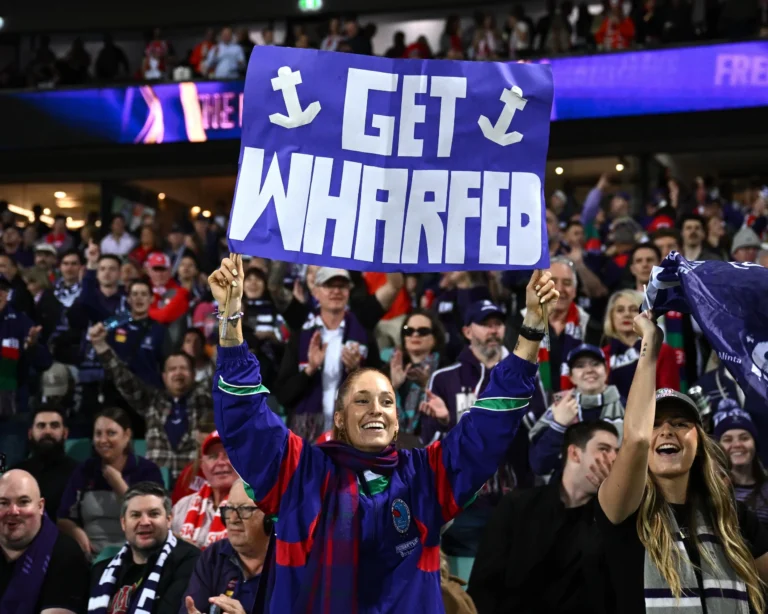
Mike, I’ve noticed a surge in mentions of “How those goal celebrations play out and the potential for Wharfie Time, we’ve got to dot some Is and cross some Ts there,” on social media, seemingly linked to sports. Can you clarify its significance?
Let’s start by exploring Fremantle’s deep-rooted maritime and dockworker heritage, which has significantly shaped the identity of the port city’s AFL team. As you may know, the Dockers are set to face the Brisbane Lions in this Saturday’s grand final, aiming to secure the club’s first premiership flag.
What is Wharfie Time?
That sheds light on the “If we have [goal songs] for the Brisbane Lions, which has worked well, then, what’s the Fremantle equivalent, and how does that play out?” reference, but what does it mean in terms of timing? This concept is not related to Australian Western Standard Time. Instead, it refers to a moment during a match when the team could use a boost, particularly towards the end of a closely contested game.
Activation at Optus Stadium
At the Dockers’ home ground, Optus Stadium, this unique activation includes special lighting, the ominous sound of bells echoing through the loudspeakers, and visuals of a boat navigating through tumultuous waves on the big screen. Its purpose is to energize the crowd and motivate the team to achieve remarkable feats, akin to a pre-recorded hype-man.
Indeed, I find the sound of a tolling bell quite motivating for athletic performance. Has this strategy proven effective for their victories? This tactic is implemented sparingly to maintain its mystique and maximize its impact. However, it has seemingly worked twice this season for the Dockers. During their round nine match against Hawthorn, it inspired a comeback win, and most recently, it played a crucial role in their semi-final against Geelong, where Fremantle managed to maintain a slim eight-point lead to secure victory.
Debate Over Usage in the Grand Final
This is the process: the bell tolls, the crowd erupts, and the Dockers come out on top. Mission accomplished. This likely explains the ongoing debate regarding its use during the grand final. Discussions have erupted this week about whether using this tactic at the title game against Brisbane is appropriate, considering the match will take place at the MCG, a neutral venue without a designated “home” team. Some argue it could provide Fremantle with an unfair edge, asserting that granting one team special privileges is unjust. Others believe it is merely harmless fun that enhances the atmosphere.
Do all teams possess their own forms of motivation, or is this unique to the Dockers? While the specifics of Wharfie Time are exclusive to the Dockers, the Lions typically depend on more conventional motivational methods, such as genuine crowd support or a coach’s pep talk. However, Brisbane does have goal songs that will be permitted during the grand final. Last year, there was an abundance of John Denver’s music during the grand final, particularly with star forward Charlie Cameron scoring four goals, each followed by “Take Me Home, Country Roads.” Logan Morris has “On A Night Like This” by Kylie Minogue, which is fitting since the pop icon will headline this year’s pre-game entertainment.
AFL’s Position on Wharfie Time
After following that link, I discovered a rather eclectic playlist. What is the AFL’s stance on Wharfie Time? The organization is currently undecided about its use at the MCG. Despite reports suggesting that this practice may be banned at the grand final, AFL chief executive Andrew Dillon has stated they are still deliberating the matter.
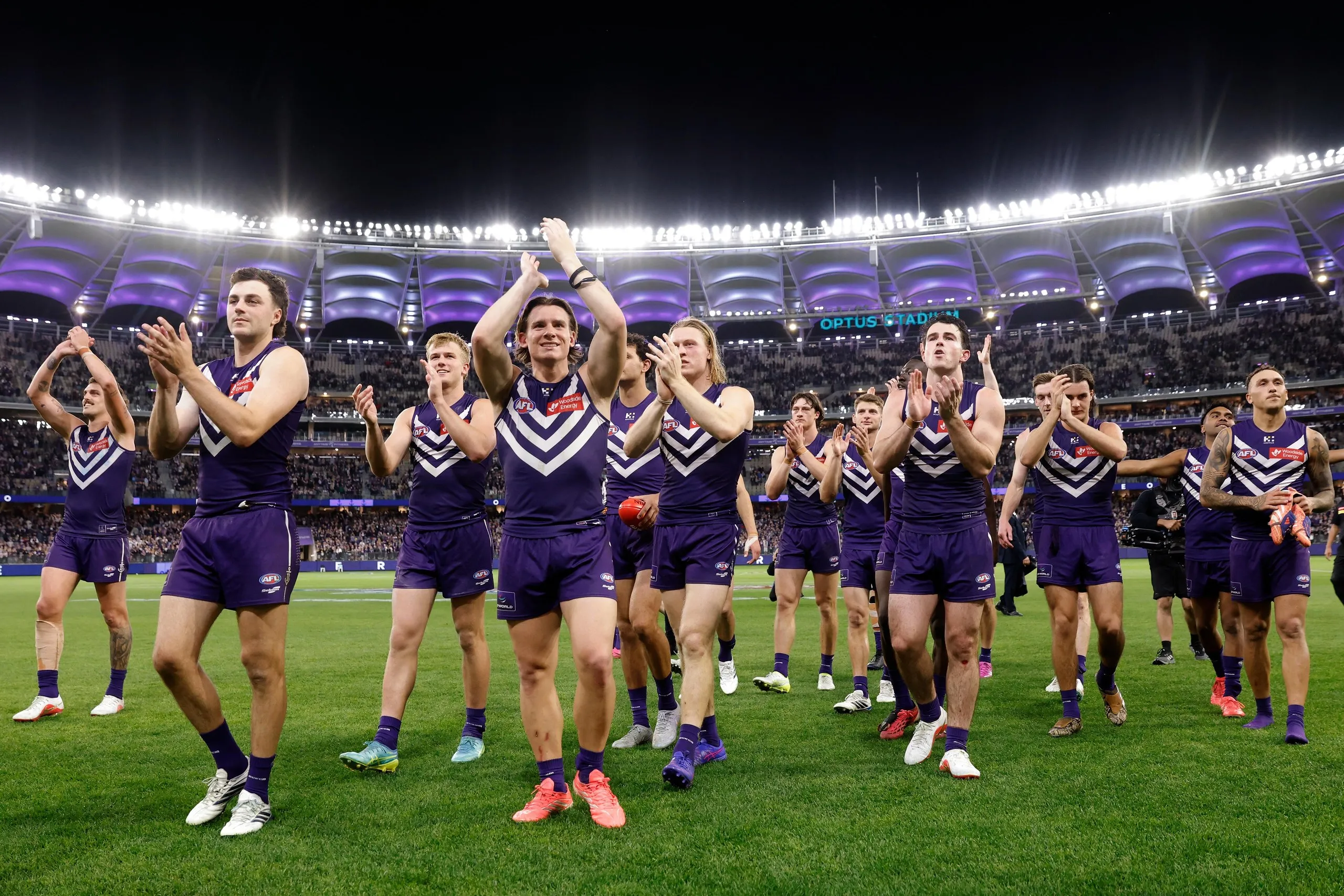
“How those goal celebrations play out and the potential for Wharfie Time, we’ve got to dot some Is and cross some Ts there,” he said. “If we have [goal songs] for the Brisbane Lions, which has worked well, then, what’s the Fremantle equivalent, and how does that play out?”
Who Controls Wharfie Time?
So, who determines when it becomes Wharfie Time on Saturday? The identity of the individual who controls the timing remains unclear. Respected football journalist Caroline Wilson has claimed that Fremantle’s chief executive, Simon Garlick, is the “sole controller” of the activation, having a direct link to the scoreboard operator. However, their ruckman Mason Cox contradicts this, suggesting it is managed by someone in the club’s administrative staff.