


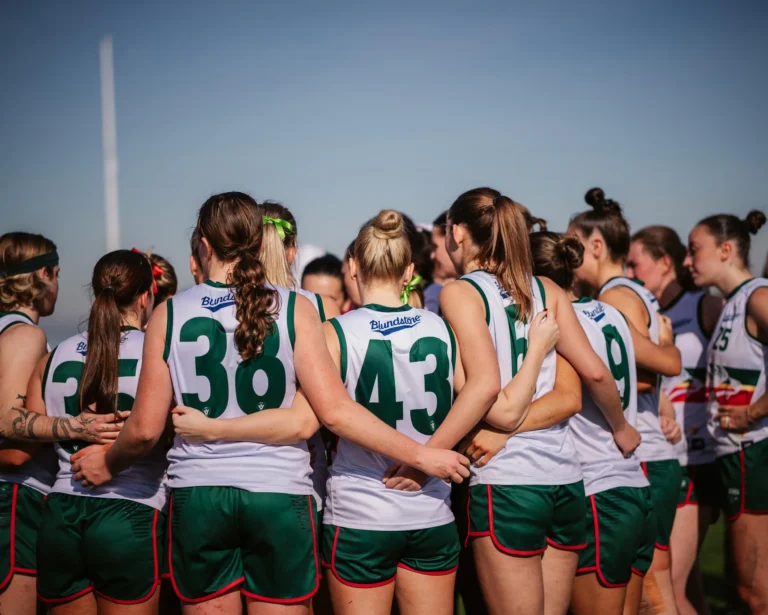
Kylie Minogue is set to captivate 100,000 fans at the MCG this weekend, but the Tasmania Devils are looking to introduce another female voice on grand final day in a groundbreaking initiative.
In a potential first for the AFL, the club intends to include both male and female vocals in the official recording of their team song, which they plan to select by the end of the year.
Song Selection Panel’s Goals
The song selection panel for the Devils aims to ensure that the melody resonates well when sung by either AFL players, AFLW athletes, or fans in the stands, while also making the lyrics inclusive for all Tasmanians.
Caroline Sharpen, the chief executive of the Tasmanian Symphony Orchestra, is among the eight members of the panel that has convened three times to establish criteria, which will be unveiled next month.
“One of the things that struck me in one of the very early meetings was just hearing how important it is for the team song to carry a female voice as well,” she stated.
“This is a football club, the Tasmania Devils, we have AFL and AFLW teams as part of the one club, so the female vocal is going to be very much a part and a reflection of who the club actually is.”
Addressing Gender Representation
The inception of the AFLW a decade ago highlighted the pervasive male influence in the sport. The Western Bulldogs adapted their song “When the song’s played, when you run out or when you end the game, it’s males that are singing that song,” to include “It would be a nice feeling to be represented by a female and show that football is for men and women equally and that we don’t have to run out to a song before our game, listening to males sing.” while Essendon released a female-sung version with revised lyrics. Several clubs have made minor changes to eliminate or adjust gendered language.
The Devils’ song selection panel is starting from scratch, aiming to elevate women’s experiences. Meghan Gaffney, the club’s VFLW captain with a decade of singing training, spent four years at GWS in the AFLW. She appreciated the Giants’ Big Big Sound but felt it didn’t resonate as much with AFLW players.
“It’s just where the song sits in a vocal range, so it’s easy for both men and women to sing, and it sounds good when both men and women sing or chant,” she remarked. “But also, at the end of the day, the main way that this song is going to be sung is by football players and a lot of footy players aren’t musically inclined or talented, so it has to be arranged in a way that singers don’t need to be professional for the song to sound good.”
Creating an Inclusive Anthem
Gaffney noted that the Devils’ song must function well in acoustically challenging stadiums and be “She just spoke so articulately about her great career playing football and singing team songs that were probably written by and sung by blokes traditionally – it’s not always something that sits naturally either with the female voice, and the words don’t always include a feminine perspective,” by both men and women. “How can we really make sure that that’s an important part of this process and really include all of us here in Tasmania?” she explained.
“But also, at the end of the day, the main way that this song is going to be sung is by football players, and a lot of footy players aren’t musically inclined or talented, so it has to be arranged in a way that singers don’t need to be professional for the song to sound good.”
Sharpen mentioned that the panel, which also comprises musical theatre performer John X and former Richmond player Matthew Richardson, found Gaffney’s insights compelling.
“She just spoke so articulately about her great career playing football and singing team songs that were probably written by and sung by blokes traditionally – it’s not always something that sits naturally either with the female voice, and the words don’t always include a feminine perspective,” she noted.
“How can we really make sure that that’s an important part of this process and really include all of us here in Tasmania?”
To date, there have been over 200 unsolicited song submissions to the club. Notably, Mike Brady, known for “Up There Cazaly,” and Tasmanian punk band Luca Brasi have expressed interest in writing the new team anthem.
The panel is expected to finalize the selection criteria and formally invite submissions next month, with a decision anticipated before year-end.